
The Ultimate Guide to Climbing Mount Kilimanjaro via the Marangu Route
Climbing Mount Kilimanjaro is a bucket-list adventure for thrill-seekers, nature lovers, and explorers around the world. Towering at 5,895 meters (19,341 feet), it stands as Africa’s highest peak and the tallest free-standing mountain globally, attracting thousands of climbers each year. Among the numerous routes to reach its summit, the Marangu Route is often called the “Coca-Cola Route,” thanks to its popularity and reputation for being more accessible.
If you’re considering taking on this challenge, understanding what makes the Marangu Route special is essential. It’s more than just a trail; it’s a journey through lush rainforests, alpine meadows, and stark mountain scree, culminating in the breathtaking view from Uhuru Peak. Whether you’re a first-time trekker or someone seeking a reliable and relatively straightforward climb, this guide will provide you with all the vital details to make your Kilimanjaro adventure safe, enjoyable, and successful.
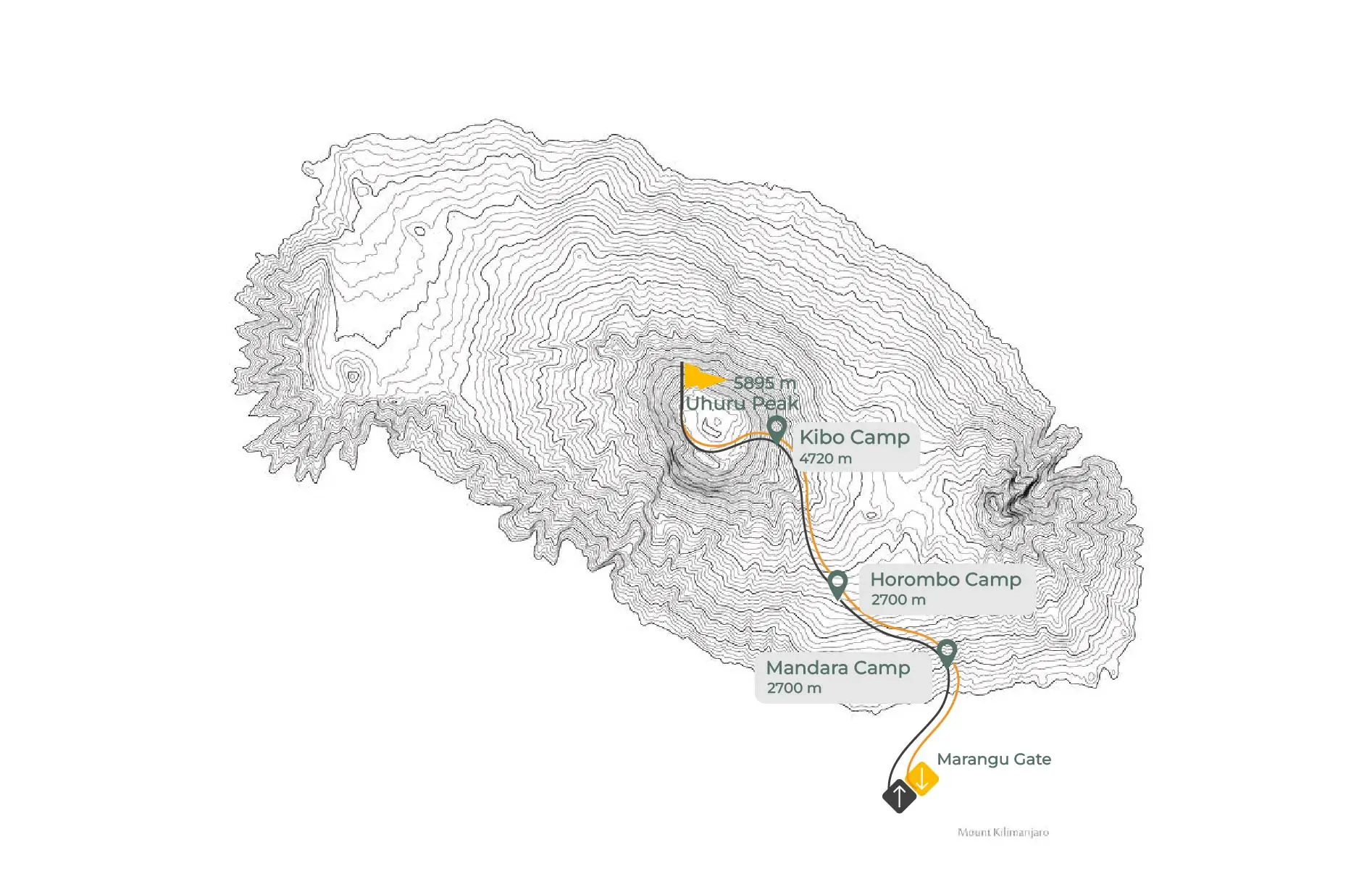
Why the Marangu Route? What Makes It Unique?
Accessibility and Comfort
Unlike camping routes that require setting up tents each night, the Marangu Route features mountain huts—basic but comfortable dormitories with beds, cooking facilities, and communal spaces. This means you don’t need to carry heavy tents or camping gear, and you can rest more comfortably after long days of trekking. For many, this makes the climb more appealing, especially for those new to high-altitude trekking.
Well-Established Infrastructure
Being the oldest route on Kilimanjaro, the Marangu Route benefits from extensive support infrastructure. The trail is well-marked and maintained, with frequent checkpoints and guides experienced in managing altitude sickness and safety concerns. This familiarity and support system add an extra layer of security for climbers.
Shorter and More Direct
The route typically takes 5 to 6 days, making it suitable for those with limited time or looking for a quicker ascent. Its direct path from the Marangu Gate to Uhuru Peak offers a relatively straightforward climb compared to longer or more complex routes like Lemosho or Northern Circuit.
Scenic Diversity
From lush rainforests to lunar-like scree slopes, the Marangu Route offers a variety of landscapes. Trekkers get to experience Kilimanjaro’s rich biodiversity, spotting wildlife in the lower forests and enjoying panoramic mountain views as they ascend.
Cost-Effectiveness
Because of its popularity and infrastructure, the Marangu Route is often more budget-friendly than some of the more remote or longer routes. This makes it an attractive choice for many climbers seeking good value.
What to Expect on the Marangu Route
Duration and Elevation
– Typical Length: 5 to 6 days
– Starting Point: Marangu Gate (1,800 meters / 5,900 feet)
– Summit Point: Uhuru Peak (5,895 meters / 19,341 feet)
Terrain and Landscape
– Day 1: Dense rainforest with abundant wildlife
– Day 2: Moorland zone with giant heathers and lobelias
– Day 3: Alpine desert with rocky and scree slopes
– Day 4: Screes leading to the summit
– Day 5: Descent through rainforest
Accommodation
– Mountain Huts: Basic dormitories equipped with beds, shared bathrooms, and communal dining areas. While simple, they provide shelter from the elements and some comfort during the ascent.
Physical Challenges
Though less technically difficult, climbing Kilimanjaro on the Marangu Route still demands good physical fitness, acclimatization, and mental resilience, especially during the summit night.
Step-by-Step: The Journey on the Marangu Route
Day 1: Marangu Gate to Mandara Hut
Your adventure begins at the Marangu Gate, where you’ll check in with park authorities and register your climb. From here, the trail winds through thick rainforest, teeming with birdlife, monkeys, and lush vegetation. Expect to walk for about 4-5 hours, covering roughly 8 kilometers (5 miles).
This first day is physically gentle but sets the pace for the climb. The cool, humid environment is invigorating, and the thick canopy offers a sense of immersion in nature. You’ll arrive at Mandara Hut, nestled at 2,700 meters (8,860 feet). Take some time to rest, hydrate, and prepare for the next day.
Day 2: Mandara Hut to Horombo Hut
Leaving the rainforest behind, the trail crosses moorlands dotted with giant lobelias and groundsels—plants adapted to high altitudes. The ascent is gradual, taking about 6 hours and covering approximately 12 kilometers (7.5 miles).
This day is vital for acclimatization. You’ll notice the air thinning, and the landscape opening up to breathtaking views of the mountain. Arriving at Horombo Hut (3,720 meters / 12,200 feet), you’ll be in a zone where acclimatization can begin, reducing the risk of altitude sickness.
Day 3: Rest and Acclimatization at Horombo
Many climbers opt for this rest day, which can include short hikes to Zebra Rocks or Mawenzi Tarn. These activities help your body adjust to higher elevations and increase your chances of reaching the summit. Enjoy the cooler air and the stunning scenery, and ensure you stay hydrated.
Day 4: Horombo Hut to Kibo Hut
The trek continues through the alpine desert, with fewer plants and more rocky terrain. The journey takes about 6-7 hours and covers roughly 9 kilometers (5.6 miles). As you approach Kibo Hut (4,700 meters / 15,420 feet), the landscape becomes more barren, emphasizing the stark beauty of Kilimanjaro’s summit zone.
Day 5: Summit Night from Kibo Hut
This is the most challenging part of the climb. You’ll depart around midnight for the final push to Uhuru Peak. The ascent involves navigating steep scree slopes and icy patches, so crampons and trekking poles are essential.
Reaching the summit at dawn is an incredible experience—standing on the “Roof of Africa,” witnessing the sunrise over the clouds, and the vast landscape below. After taking photos and celebrating your achievement, you’ll begin your descent back to Kibo Hut, and then down to Horombo Hut.
Day 6: Descend to Marangu Gate
From Horombo, it’s a downhill walk back to the Marangu Gate, completing the journey. Celebrate your accomplishment with your guides and fellow climbers, and reflect on the unforgettable experience.
Comparing the Marangu Route to Other Kilimanjaro Routes
| Aspect | Marangu Route | Machame Route | Lemosho Route | Northern Circuit | Rongai Route |
|---|---|---|---|---|---|
| Acclimatization | Moderate | Better (longer duration) | Excellent | Excellent | Good |
| Trekking Days | 5-6 | 6-7 | 7-8 | 7-9 | 6-7 |
| Mountain Huts | Yes | No (Camping) | No (Camping) | No (Camping) | Optional (Huts or Camping) |
| Difficulty | Moderate | Moderate to challenging | Challenging | Moderate to challenging | Moderate |
| Success Rate | Moderate | Higher | Higher | Highest | High |
| Landscape Variety | Good | Very good | Excellent | Excellent | Good |
| Crowds | Very crowded | Less crowded | Less crowded | Less crowded | Less crowded |
If comfort and shorter duration are your priorities, the Marangu Route is ideal. For higher success rates and more scenic diversity, longer routes like Lemosho or Northern Circuit may be preferable.
Tips for a Successful Kilimanjaro Climb via Marangu
1. Physical Preparation: Engage in aerobic exercises like hiking, running, cycling, and strength training at least 3-6 months before your climb.
2. Altitude Acclimatization: Consider spending extra days at intermediate points or choosing routes with better acclimatization profiles if possible.
3. Gear and Clothing:
– Layered clothing: moisture-wicking base layers, insulating mid-layers, waterproof outer layers.
– Good quality hiking boots with ankle support.
– Warm hat, gloves, and thermal socks.
– Sleeping bag suitable for cold temperatures.
4. Hydration and Nutrition: Drink plenty of water and consume high-energy snacks like nuts, dried fruits, and energy bars.
5. Guided Tours: Always book with reputable, licensed operators who prioritize safety, proper acclimatization, and environmental responsibility.
6. Health Precautions:
– Consult your doctor about altitude sickness medication.
– Be aware of symptoms like headaches, nausea, dizziness, and fatigue.
7. Environmental Responsibility: Respect the local environment, follow Leave No Trace principles, and support local guides and communities.
Safety Considerations and Permits
Climbing Kilimanjaro requires permits issued by the Tanzanian government, which your tour operator will organize. Always choose a reputable company with experienced guides, who are trained in first aid and emergency procedures.
Altitude sickness can affect even the most prepared climbers. Your guides will monitor your health, but it’s crucial to communicate any symptoms promptly. If severe symptoms occur, descent is the best remedy.
Best Time to Climb Kilimanjaro via the Marangu Route
– Dry Seasons: June to October and December to February generally offer the best weather, clear skies, and safer trekking conditions.
– Rainy Seasons: March to May and November tend to be wetter and more challenging, with muddy trails and increased avalanche risk.
Climbing Mount Kilimanjaro via the Marangu Route is an adventure that combines natural beauty, cultural richness, and the thrill of summiting Africa’s highest peak. While it’s not the longest or most technically demanding route, it offers a balanced experience suitable for many types of travelers.
Preparing well, and maintaining a positive mindset are key ingredients for success. Remember, the journey is as important as the destination. Standing atop Uhuru Peak, gazing over the vast African landscape, will be a memory that stays with you forever.
Are you ready to take the first step toward your Kilimanjaro adventure? The mountain awaits!